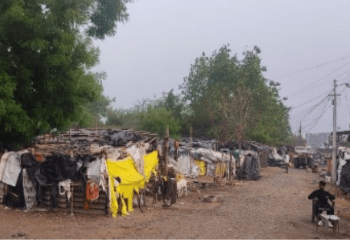
SIDDHESHWARI GOND BASTI, CHIKHALI ROAD, NAGPUR, DIST-NAGPUR
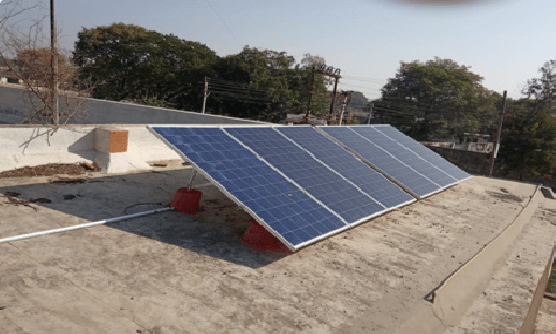
An Emerging Option for Rural Electrification Village transformation with Renewable Energy.
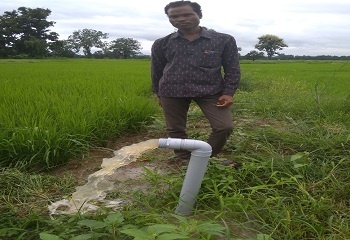
An Emerging Option for Rural Electrification Village transformation with Renewable Energy.
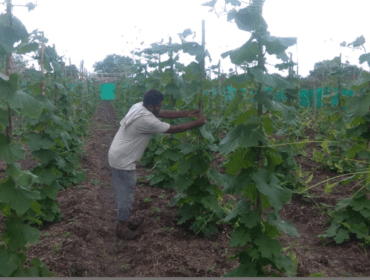
Vision changed the livelihood
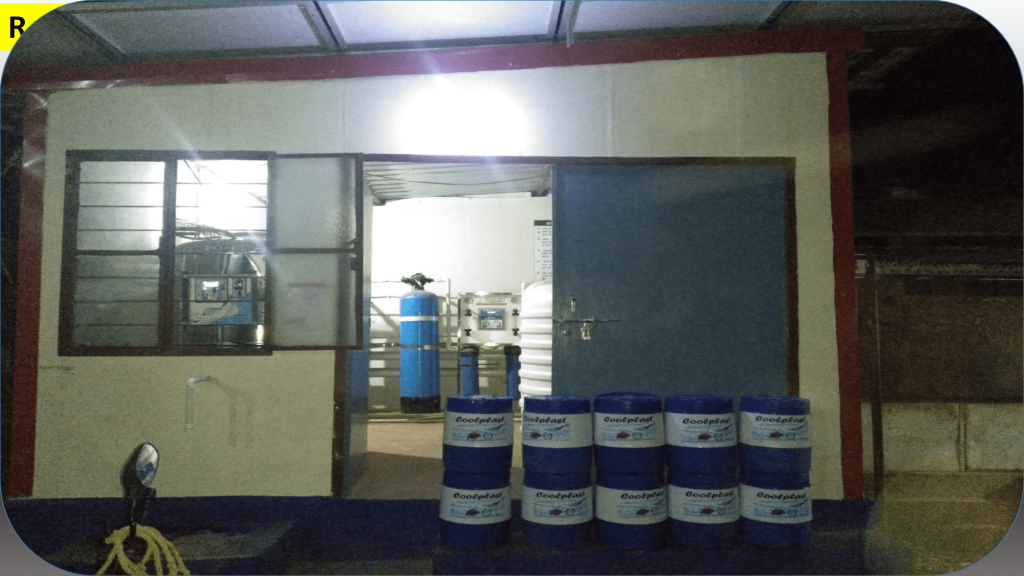
Solar Based Drinking water Purification System Panchayat manages its own safe water supply Success story of Water Purification Plant in Hiwara Lahe Village, Dist-Washin
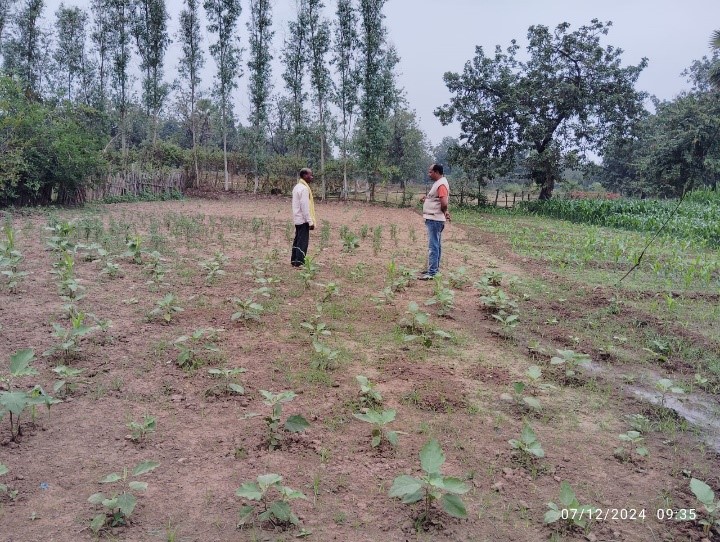
Transformation of Pusu Gheba Pungati Agricultural Practices
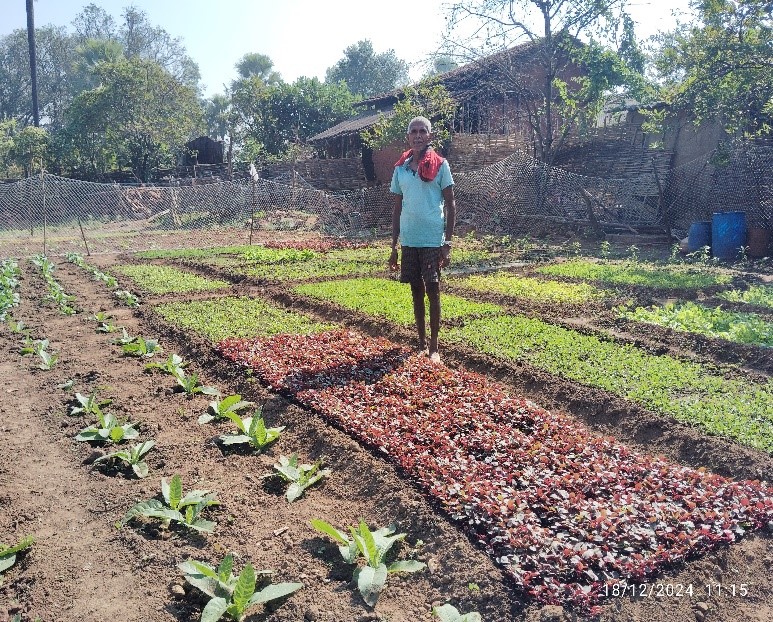
Transformation of Suklal Mara Kunjami’s Agricultural Practices

Manisha begins her day at 10:30AM Kamtha ZP Primary School by cleaning the premises of the school, classrooms, preparing Mid Day Meal, and finishes by 2:30 PM after serving the warm mid-day meal to children. She has been committed to this service for the past 4 years. Her roots are fromAmravati city 30 km away from Kamtha. She was married to her husband Ghansham Indore. She mentions her expression of how she misses city glamour but has adjusted herself to village life and is happy that she is now working in a school as a helper, .she is, even more, happier that

 because of her work in school she is able to spend more time with her three daughters as they study in the same school. Her family had been ever supporting to herand has never complained because of non-availability at home. She says “We want to support my daughters to the fullest of our capacity to provide children with a good education, I have seen poverty and it makes an individual vulnerable and weak in the society. I don’t want my children to face any such situation, they need to be educated where they can empower themselves and provide for themselves”.
Manisha is responsible for the mid day meal to the children of Kamtha. Kitchen garden through the HDB Financial Services WASH Project in Washim saw School Sevikas like Manisha to be included as stakeholders who would support the activities as well as strengthen the implementation in the right way. The process also aimed at physical improvement in the school system by introducing nutritious to the regular supplies of mid-day meal. The transformation of theschool environment under WASH Project including the better sanitation facilities, planting of flowers and vegetable gardens, emphasis on cleanliness closer links with parent and community members, and better turn-out of students, help generate high morale. The kitchen garden is used as an approach to have students, teachers, school sathi work together, at the same time improve the nutrition, reduce expenditure on the purchase of vegetables and increase the productivity of the underutilizes resources and assets. Because of the rural setting most of the students and Manisha had some prior experience in farming through an interactive process with an horticulture extension specialist they shared knowledge and identified the need for: Vegetable bed raising, Spacing of seedlings, Orientation
of the beds, Ensuring seed quality and seed selection and multiplication techniques, ways to supply water at regular intervals, the need of fencing, weeding techniques, the use of natural fertilizers such as compost. The small size if the plots at the proximity to the school and the limited labour requirement were not perceived and an extra burden and the workload was mostly performed by Manisha. She volunteered for the most important activities like timely provision of water, fencing and protection from monkeys. The establishment of the kitchen garden and adding to the skills of the student directly involved in the activities was only one way of building their capacity. This was not only limited of growing vegetables but quickly spread to include other issues they felt to be important. Different ways of preparing the vegetables were discussed among Manisha, School Sathi and Students for the ways that are more nutritious and healthy. Issues regarding general health were also brought up with parents. The initiative also saw the record the inputs and time spent on the kitchen gardening on the one hand and the produce they obtained. A kitchen garden can be a catalyst to introduce a community-based approach and for setting up small groups, especially women group. This is a critical factor in the culture where physical and social mobility of woman is limited. For the children, the garden provides a context for understanding seasonality and life cycles, an opportunity to work cooperatively on the real task. The garden created a common experience to build on in multiple settings- from class-room to celebration. Students understand the role of food in life. The garden allows them to improve nutrition and highlight healthy foods. It offers the opportunity to teach life skills such as gardening and cooking. Students value the garden- of pride and ownership which discouraged vandalism. The skills and messages students learn about healthy food in the school garden can be transferred back to their homes soon..

Yeshwant Sautkar is a resident of Kurhad village in karanja lad taluka of Washim district. He owned a truck in the early 1990s and used to be a logistic trucker in Nagpur. Back then his family of wife and three daughters used to live in Nagpur where he used to run his small business of transportation & . logistics. Conditions were not that good in those days but since daughters were young the expenses of their schooling and other was minimal. In the late 90s he had to shift to Kurhad with his family because of economic reasons and the downfall in his business.

When he shifted to kurhad he didn’t owned any agricultural land, so he started purchasing lands with whatever money he left from his previous business. The very first piece of land he bought for agricultural purpose was 3 acres. As other farmers he used to follow the farming trends and gain livelihood. With passing years he gradually realized that he needs to hold maximum land holding so that the overall income would increase that he requires to run his family, educate his daughters etc. Today he owns 12.5 acres of land which are of the good pieces available in kurhad village. Nana, what people call him in the village, got in touch with Yuva ruralAssociation in 2013 in the Sustainable agriculture project. The journey with the organization taught him many things related to agriculture and changed his perspective towards business model. He enrolled himself as transforming farmers from traditional chemical farming to organic farming. He decided to give 2 acres of his land under organic production under the PGS India certification process. Since 2016 he is following the rules and regulations under PGS certification and cultivating crops as organic produce. As a farmer his expectations were also very basic- to get market to the produce and a good price. He also became a part of YRA?s Producer Company named “Vidarbha Agriculture Producer Company Limited”. 2016 he got all technical support for his green gram crop which was cultivated organically. The pest attack on his crop was very heavy compared to neighboring plots as the quality of the produce was good. He struggled and managed to get control over the pest attack by following the practices told by YRA. In the last year he produced pigeon pea (toor) in his land organically. This was 10 the period when the market substantially dropped for toor, he was sure that he would not earn any profit if he sells it in open market, and hence he approached to YRA for market linkage. As earlier years, VAPCL was not running any procurement center for government and henceYRAdecided to procure his toor for internal usage through VAPCL. He produced 7.14 quintal of toor which was purchased on credit by VAPCL at a price higher than the market rate. During that period of year the market rate for Toor per quintal was Rs. 4200 whereas we offered him 1000 Rs more @5200Rs/quintal. His annual income increased by 7140 Rs only because of proper market linkage. This money was used by him for his daughter’s education purpose and the additional income was used for his family. He is happy that he got the opportunity to be associated with YRA. .

My name is Mr. Subhash Haridas Ambat aged- 31 years old. Living in the village named Patoda (Gangakinara) under Pathri block of Parbhani district. I have a family consisting of 6 members. My wife (Urmila 28 years) two childrens ( 11 years & 9 years). My parents are also residing with me. By occupation I am a small farmer having 3 acres of agriculture land .where I grow crops like, cotton, soybean, sugar cane and Jowar. Apart from these crops I have grown up Guava in my field. In addition, I have kept 3 good quality cows and a calf for milking and 2 bullocks for plowing purpose.

Purely my family livelihood is depends upon my said agricultural production and milk. I support my children to study well because I and my wife are less educated. Since I have some domestic animals for my livelihood purpose but unable to afford a grass cutter and compel to feed my livestock without cutting the fodder which made more wastage in each feeding. Meanwhile, I heard that YRA is working in our village with the support of HDFC Bank. They have multiple activities for famers and for their livelihood development. So I thought that, I will request YRApeople and get it. I met Mr. Siddheswar (Village Facilitator) and requested him to avail the grass cutter machine from the project with needed contribution. Then Mr. Siddheswar had placed my name in the project office for necessary process. After that, he asked me contribute Rs.5000/- against which I received receipt from YRAand I received the grass cutter after 15 days. Now I am using grass cutter since January 2018 for feeding my livestock. There is no wastage of fodder now. All my livestock became healthier compare to before. There is change in milk production also, earlier I used to get 37-38 liters per day but now I am getting 41-42 liters. I am very glad to receive the grass cutter machine from YRA which I had been longing to afford it by myself. So I extend my gratitude toYRAand HDFC Bank for their handholding support. .

Bhagwat Ashroba Sakhre is one of the villagers ofAmbegaon of Selu block in Parbhani district of Maharashtra State. He is a small farmer holding 2 acres of land for his livelihood. He is residing with joint family. He cultivates crops like Cotton, Turmeric and Soybean. His family fully trusts on the agriculture production. Last year they were unable to have much crop yield due to erratic rainfall in the area. Bhagwat says “Yuva RuralAssociation has been involved in social. development activities in our village since two years and conducted many

program activities for the betterment ofpeople such as, women empowerment, sustainable agriculture development, introduction of renewable energy equipment’s, supporting allied activities to needy people groups etc.” He was having a problem of soil erosion in his agricultural land when rain fall occurs. In each season soil erosion arises due to rain and sloppy land pattern. The fertile soil of his land degraded in each season due to rain which causes fewer yields in each season. So he requested Yuva Rural Association staff to have one Recharge Pit in his land to recharge ground water also control the soil erosion. Due to his request they were agreed and dug one recharge pit in the field. The size of the recharge pit is 25 feet width and 21 feet depth. Because of recharge pit work, nearby bore well water table has been increased, soil erosion controlled, moisture increased in nearby area and the stored water became accessible for domestic animals for drinking. In this year he is expecting more yields due to this recharge pit. He says “This is an excellent privilege that the Yuva Rural Association & HDFC bank given to me, so I would like to extend my heartfelt thanks from my end.”

Moolanchi Pallavi Taai” is the term villagers of Sirsoli often use to address YRA s School Sathi Pallavi Banode. In Marathi “Taai” means elder sister and Moolanchi means “Children”. Pallavi has earned this title because of her loving and ever smiling approach with children in the village. Most of the children are associated with her because of the HDB Financial Services Project in their village where she works as School Sathi.  The Project addressed to the ever struggling issue of sanitation facility for the school children in Sirsoli s Zilla Parishad School by providing anew sanitation unit

with running water. The school with 23 students now has access to clean and safe toilets. The project wouldn’t have been successful if it had not introduced resources like Pallavi. As a School Sathi she was trained for WASH programs -Hand wash, utility of sanitation units, do’s and don’ts for sanitation units, Bal Sansad (Child Parliament) and Kitchen Garden in School Initiative. ! ! 16 Pallavi is now 23 years of age and is from Dhaigaon Gowande village in district Amravati. She was married to Rahul Baban Banode 3 years ago and has been living in Sirsoli ever since. Pallavi now lives with her husband, father in-law and mother in-law. The family earns their basic income from farming and survives on their 3 acre farming with selling few of the produces and utilizing some for themselves. Mandabai BabanBanode works as anaganwadi sevika in the village. It was then when YRA organized a joint meeting with Sirsoli Schools Management Committee, Head Master, School Teachers and Anganwadi staffs. The meeting was to discuss the role of School Sathi and who as per them will be the right person to hold the responsibility of School Sathi. Pallavi’s name was suggested by her mother in-law Mandabai as she new her that she would fit into the role perfectly. Manadabai says “Pallavi is smart; she can understand the concepts and had always the zeal to connect with children. Therefore I was confident that she would be selected for this role”. She was selected with few other nominees and were called for round of interviews at YRA s Kamargaon Office. After detailed discussion with selected members Pallavi was selected as one of the School Sathi for the WASH Project-Washim. Pallavi underwent training for WASH program, Formation of Child Parliament and Development of Kitchen Garden in schools.

The youth volunteers of Yuva Rural Association are mainly from the rural and tribal areas. These youth are extremely creative and filled with new ideas and initiatives. However, their creativity does not come in the open since they neither have a platform for expressions nor have the required directions and motivations.Therefore, under the banner of Hamara Beej Abhiyan and Anubhav Shiksha Kendra, a street play workshop was organized for these youth. They were guided on how to come up with effective street plays for taking the message of Anti-GM (genetically modified) crops to the general public.

This workshop was a huge morale booster for the youth and they came up with wonderful and effective street plays to take the message of Anti-GM crops to the farmers, consumers and the general public. They conducted these street plays in 150 villages and were lauded for their efforts.

The youth were impressive in their performance and were extremely thankful for being given an opportunity to undertake a social cause in a very creative and different manner.

Yashwant Namdev Sautkar is a farmer from Kurhad Village of Karanja-lad district of Washim. He owns four acres of land and he has been practicing Organic farming since last 1 year. Before taking up Sustainable Agriculture, he was using chemical fertilizers and traditional methods for farming. He used to spend more money on the purchase of the fertilizers which was higher than the money earned through farming. The major crops undertaken by the farmers in his village are Soya bean and Tur. In March 2016, Yashwant got associated with the Organic and sustainable

agriculture project of Yuva Rural Association. During this project he was oriented by the YRA team on the benefits of organic farming. The technical experts from YRA advised him to get the soil test done in order to know the quality of soil. From the soil testing reports he got to know that soil treatment is necessary before taking up crop. He treated the soil with organic nutrient like compost manure, poultry manure and neem manure to add more nutrition to the farmland. To stop the soil flow from his field he did farm banding and then started plowing the field. During this Kharif season he used the other organic farming practices like seed treatment, mixed cropping of Mung, Udid and Tur which gave him a good result and also extra production. In coming months he receivedprofit and was happy with the use of organic fertilizer. A cost comparison shows that Yashwant used to spend twice the amount of organic fertilizer on Chemical fertilizers. The chemical fertilizer costs Rs.9000 per acre whereas organic fertilizer costs Rs.3662 per acre only.

Jaipal Vadguji Badawak,is a farmer from Shivani village of Ramtek block, Nagpur. His mother a widow took lot of efforts and worked hard on their 10 acres to cultivate crops heavily depending on monsoon for irrigation. There was no alternate source of water for farming. Jaipal got 5 acres of land post his brother‟s marriage and property separation. He is not educated enough to find a job  in nearby areas nor wants to leave his mother alone in the village. Farming was the only option left before him. Due to water scarcity, the crop yield was very low and it was becoming difficult to

cultivate. All the farmers of his village and including him were not getting any work in other‟s field either. It was at this time when Yuva Rural Association introduced PHAD project in Shivani village and Jaipal was selected as one of the beneficiaries. The project supported many like Jaipal to have a steady income from agriculture aided now by regular irrigation.The crop yield has increased drastically and the profit continues.

Aalesur is a village in Tumsar block in Chandrapur district. Tilakram Narayan Garat, age 61 is native of this village. He has completed his primary education and owns 6 acres of farm. His family consists of 8 members. Tilakram was identified as one of the beneficiaries for the Climate Change Mitigation project, through which he got a biogas unit constructed. Since he has enough agriculture waste,manure,  municipal waste and green waste, he was shortlisted for the biogas unit installation. In March 2017 the construction of biogas unit was completed and he started using the biogas plant.

All the meals of the entire family iscooked on the biogas. He says he is very thankful to YRA as all the waste is useful in production of biogas which has saved the cost of cooking gas and improved the health of the female members of his family. The women in the house are no more troubled by making food on chulha.

Prem was depressed and alone as his mother was no more with him. He is a 7 year old boy who stays with his uncle and aunt at ShalgoanMukund village of Buldhana district of Maharashtra. He was selected in the research group of GalliGalliSimSim project of YRA & Sesame Workshop India Trust. Being an average student in studies and in pain as  his mother was no more with him, no one was able to help him. His family and teachers made lot of efforts to improve his performance in school, but nothing was making him happy or improves his studies. When YRA facilitator visited

his family and introduced him and his uncle & aunty about the PCL activity on mobile phone, his interest towards studies especially Mathematics and Marathi increased. The learning module helped in learning his subject in innovative way, which he enjoyed. As his uncle and aunty were also oriented about the modules, whenever he faced any difficulty, they helped him. He liked studying over the phone and play with his best friend Pratiksha. His teachers also reported change in Prem‟s performance. Prem‟s teachers recorded about the PCL activity.

Dalli is a small village, in Sadakarjun block of Gondia where 355 families dwell in. 95% population is tribal. Since 2015, YRA is working for the villagers. Mass awakening of the villagers through an awareness campaign was an important activity of YRA, where the villagers were educated about their rights. Formation of Forests Right Committee to establish collective rights were the results of the mass awakening workshops. Villagers are now aware of their rights and their demands towards the Forest and Agriculture department. The committee wrote a letter to Tahsildar for

demanding their rights. The application was approved and Collective Forest management Committee was established. Soon the Forest management plan was out. Now, the committee is protecting and managing the forest belt of their village. Villagers got ample employment opportunities after formation of committee. The contractor of the village used to charge half of the daily wage from the villager to give them employment under MGNREGA this practice came to an end since villagers were now aware of their rights.

Shrirang Sakhre (52) lives in Ambegaon Digar of SeluTaluka, with his wife, son, and daughter- in- law. The main occupation of this family is farming and working as farm labor as he owns only one acre of land. He had studied only till fourth grade thereafter started working as a farm labor. Illiteracy and poverty are very prominent in Ambegaon Diger. His son, Suhas looks after the land and works as a farm labor he grows Jowar and Cotton which consisted of an estimated cost of Rs.20,000 per acre annually where he incurred the cost of the seeds, fertilizers and labour. This was

proving to be a major hardship for his families survival. This always led to migration and failure in savings. He was identified by YRA as a marginalized farmer as who must be considered under the poultry and breed farm activity and his family used to rear poultry birds long ago. In the project activity, he got Rs3000 for purchasing poultry birds and he contributed Rs. 2000 which a little more than his average monthly income. He bought 10 grown birds out of the sum of 5000 and breeding them since October 2016. Apart from the purchases he also received training for vaccination and nutrition of the birds in order to keep the mortality rates higher for the birds. Within 6 months period, the birds‟ number got double, all were laying eggs and the number got multiplied. He earned money by selling the eggs at Rs, 10 each many times his family also eats the nutrient rich eggs at home. “Sometimes we used to have a treat for ourselves”, he smiles. He also sells the chicken in the market all in all.


“We never look at it in terms of business, we never do proper timely vaccination and that result into a loss to the family, I will keep track on the vaccination cycle of my birds. I thank YRA and HDFC project that they taught me one important thing that would affect my livelihood”.- Shrirang.

Rajashree is 19 years old girl who was married at an early age due to her father‟s financial breakdown. She was happy in her early married life later which changed to her experience of torture and beating.Rajashree was soon pregnant which she would change her husbands atrocities and would start to respect and take care of her. But nothing changed and Rajashree gave birth to a son who was malnourished and underweight. The baby did not survive for long. In this shock Rajashree left for her father‟s place. Her husband ran with another 17 years old girl who was not traced by neither

Rajashree‟s family, her in – laws nor the police. In this situation, her in -laws and parents supported her and gave her the confidence for starting a new life. She was encouraged by YRA counseling centre to take tailoring and stitching classes with her„Stridhan‟ money. Today Rajashree is happy and self-sustainable. Sometimes her neighbors and locality people bother her but she confidently faces them, by telling them that since she has not done wrong to anyone, then why she would suffer.

During youth awareness rally on social issues, Pramod Ilegwar was motivated to join the process. Pramod Ilegwar was a very quiet & reserved person by nature. He used to work as peon at Police station. He closely observed the crimes which his fellow villagerswere committing. He got to know about the youth awareness program in his village by Yuva Rural Association. He was the last person sitting in the corner of the room while attending workshop/trainings programs organized by YUVA Rural Association. He was shy, less confident on expressing his opinion and thoughts

during the discussion session. He started attending each and every program of YRA and realized that heshould start awareness campaign in and around Bhandara being a responsible citizen. Till now he has conducted 38 programs and motivated 322 youth to become members of Maharashtra YuvaParishad (MVP). Due to his dedication& work commitment, he was selected as the President of MYV Bhandara district. He continued his work on several social issues, motivated & influenced youth from Bhandara, Gondia, Donmanzri, Khapri&Pilgoan. His network grew in all these villages and soon he represented as President of Nagpur at State level meet of Maharashtra YuvaParishad. YRA has been the change agent in Pramod‟s life and he is passing the same energy & zeal to rural youth.

Get 30% off your first purchase

X
Scroll to Top